Accidents Happen
The headline story in the Health & Fitness section in our National Newspaper recently read:
“What it’s like to build a career after being suddenly paralyzed.”
It is the inspiring story of unexpected tragedy the author termed “a fluke accident…hit by a big wave.” He was 20, and just finished 2nd year university and was now paralyzed; unable to move anything below his shoulders, dependent on a ventilator. He tells an amazing story of dogged persistence, hard work and achievement despite seemingly unsurmountable odds.
Accidents happen and people get hurt and nobody planned it!
June 6, 2014 – O.S.A. Olympic gold medalist Amy Van Dyken-Rouen broke her back during an ATV accident. Van Dyken-Rouen had retired from the Olympics after winning 2 gold medals in Sydney 2000. She was injured when the ATV hit a curb and launched her over a drop-off. Her spinal cord was severed at the T11 vertebrae and she may never walk again.
On a snowy day in January 2016 a young father suffered devastating brain and bodily injuries when the snowmobile he was riding smashed into an immovable object. Eighteen months later he struggles to return to the business he and his partner ran so successfully. Countless hours of rehab and family counselling as well as persistent pain are the new norm.
Regular monthly benefit payments have facilitated his ability to continue his family’s lifestyle while accident benefits in the policies have provided for the extraordinary expenses that came with such a catastrophic accident.
These are the stories of people whose lives were completely shattered and changed in split seconds by something they didn’t control. Just living life, like any normal person…
There is insurance to pay for the consequences of these unfortunate life happenings. “Income Replacement” and “Loss of use” coverage due to paralysis, partial or total.
For pennies on the dollar, people can have a monthly income to replace lost wages or salary and supplemental cash for the extraordinary costs associated with a serious injury.
But what about the majority of claims for non-catastrophic injuries? The day to day short term injuries like a broken leg, or carpal tunnel syndrome. How would a 6-month absence from your occupation impact you financially?
Ask yourself:
What activities do I enjoy doing that have the potential for me to be injured and unable to work?
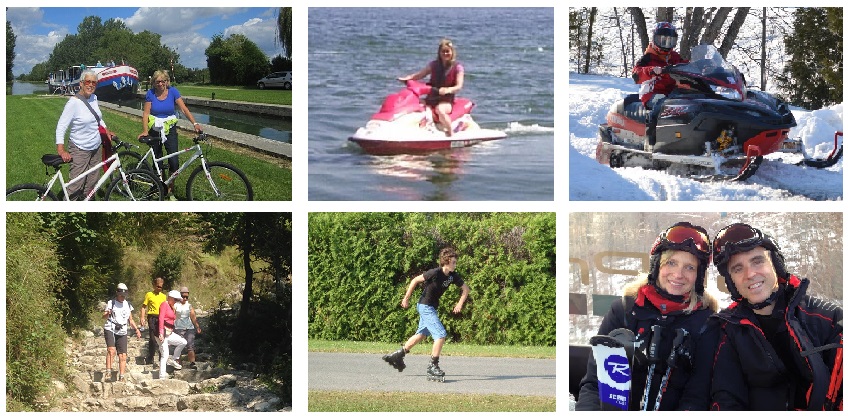
There are many poignant stories of people surviving bicycle accidents but unable to return to work for which they are skilled and trained.
Some injuries allow the person to work, but at a job that provides a much lower income that they enjoyed prior to the accident.
Most of society believes accidents happen to other people or the incidence is very low. Statistics prove otherwise.
1 in 4 people age 20 will suffer a disability of considerable duration before age 65.
Less than 50% of Canadian who work have access to employee benefits so most people don’t have a financial safety net if an accident disrupts or destroys their career or business progression.
Insurance rates are low for young people and most good policies have premiums that don’t increase.
Thankfully, most claims are much shorter than a lifetime in duration.
For many, an absence of 6 months from a regular pay cheque will cause very serious financial problems. Car payments missed result in repossession; mortgage payments missed cause foreclosures and homelessness, bills pile up and credit ratings are destroyed and even job loss can occur. For a self-employed person, financial recovery may never happen and they lose the business they worked so hard to create. All because “insurance is too expensive.”
When injury strikes, how “expensive” is that insurance now?
We all have “things”, possessions we value: like cars, houses, jewelry, cottages, boats, atvs, motorcycles all insured against loss. But for anyone who works and earns income to support their lifestyle, the most valuable asset is they have that very ABILITY to work!
What are you worth?
Here is a simple math exercise:
Current annual income x the difference between your age now and retirement age = your dollar value
Example: $100K x 30 (currently 40 to age 70) = $3,000,000
Can you afford not to insure an asset worth $3,000,000?
An insurance policy won’t reverse the serious disability, but having money to pay bills and continue a lifestyle created before the accident, can make pursuing recovery and the search for an alternative livelihood possible.
Drew Cumpson, the young man in the June 26th article started his own business focusing on hospitality and disability consulting in addition to advocating for creating homes and environments for young people with disabilities.